|
|
Schizophrenia
Index
Inducing Schizophrenia Type Symptoms
Dopamine and Schizophrenia
MDMD - I
Overview
Overview
Schizophrenia afflicts approximately one percent of the world's
population, making it the most common psychosis. Schizophrenia
is characterized by positive and negative symptoms. Fundamental symptoms included
thought disturbance, withdrawal, and difficulties managing affect. Secondary symptoms
included perception disorders ( e.g., hallucinations, grandiosity. ) Symptoms may also be
non-schizophrenic in nature, including anxiety, depression, and psychosomatic. The following examples of a disorder in
thinking is the key symptom for a diagnosis of schizophrenia. People with schizophrenia may
have bizarre thoughts, avoid social contact, behave oddly, ignore their personal hygiene,
or appear menacing. Their speech may be hard to follow, moving for one topic to another in
not logical pattern. They may describe strange or unrealistic thoughts, while others may say
their head is empty, no thoughts or ideas at all.
In general when compared to other people, those with
schizophrenia:
- From childhood a history of bizarre thoughts, speech, or viewpoints.
- Have a hard time keeping a job.
- Have / had, a hard time keeping up at school.
- History of being disliked at school or isolated.
- Less likely to marry or remain married.
- Miss work frequently.
- More likely to have problems in school.
- More prone to attempt suicide.
- Onset of psychosis in the majority is adolescence to mid-20's.
- Performs poor at work.
Persons suffering from schizophrenia regularly report hallucinations. The
most common hallucination is that of auditory hallucinations, hearing voices. Voices that
issue commands are referred to as command hallucination, and can be extremely dangerous, both
to the person with schizophrenia and people around them. A flatting of affect is common in person's
with schizophrenia. This flatness of affect is another of the key symptom for a diagnosis of
schizophrenia. People who have had schizophrenia for an extended period of time will most likely
show little emotion. They may become angry for no apparent reason, become sad at normally happy
events, or laugh at an inappropriate time. Repetitive movement is sometimes seen in
schizophrenia. Common repetitive movement that may last all day, include legs moving back
and forth, the continues movements hands, the continues shaking of their head, or the
continues movement of most any part of the body.
However, contrary to common belief, schizophrenia does not refer to a person with a
split personality or multiple personality. (For a description of a mental illness in which a person
has multiple personalities, see Dissociative Identity Disorder.) To observers, schizophrenia may
seem like madness or insanity. Perhaps more than any other mental illness, schizophrenia has a
debilitating effect on the lives of the people who suffer from it. A person with schizophrenia may
have difficulty telling the difference between real and unreal experiences, logical and illogical
thoughts, or appropriate and inappropriate behavior. Schizophrenia seriously impairs a person’s
ability to work, go to school, enjoy relationships with others, or take care of oneself. In
addition, people with schizophrenia frequently require hospitalization because they pose a danger to
themselves. About 10 percent of people with schizophrenia commit suicide, and many others attempt
suicide. Once people develop schizophrenia, they usually suffer from the illness for the rest of
their lives. Although there is no cure, treatment can help many people with schizophrenia lead
productive lives. Schizophrenia also carries an enormous cost to society. People with schizophrenia
occupy about one-third of all beds in psychiatric hospitals in the United States. In addition,
people with schizophrenia account for at least 10 percent of the homeless population in the United
States (see Homelessness). The National Institute of Mental Health has estimated that schizophrenia
costs the United States tens of billions of dollars each year in direct treatment, social services,
and lost productivity. II Prevalence Print Preview of Section Approximately 1 percent of people
develop schizophrenia at some time during their lives. Experts estimate that about 1.8 million
people in the United States have schizophrenia. The prevalence of schizophrenia is the same
regardless of sex, race, and culture. Although women are just as likely as men to develop
schizophrenia, women tend to experience the illness less severely, with fewer hospitalizations and
better social functioning in the community. Schizophrenia usually develops in late adolescence or
early adulthood, between the ages of 15 and 30. Much less commonly, schizophrenia develops later in
life. The illness may begin abruptly, but it usually develops slowly over months or years. Mental
health professionals diagnose schizophrenia based on an interview with the patient in which they
determine whether the person has experienced specific symptoms of the illness. Symptoms and
functioning in people with schizophrenia tend to vary over time, sometimes worsening and other times
improving. For many patients the symptoms gradually become less severe as they grow older. About 25
percent of people with schizophrenia become symptom-free later in their lives. A variety of symptoms
characterize schizophrenia. The most prominent include symptoms of psychosis—such as delusions
and hallucinations—as well as bizarre behavior, strange movements, and disorganized thinking
and speech. Many people with schizophrenia do not recognize that their mental functioning is
disturbed.
Delusions:
Delusions are false beliefs that appear obviously untrue to other people. For example, a person with
schizophrenia may believe that he is the king of England when he is not. People with schizophrenia
may have delusions that others, such as the police or the FBI, are plotting against them or spying
on them. They may believe that aliens are controlling their thoughts or that their own thoughts are
being broadcast to the world so that other people can hear them.
Hallucinations:
People with schizophrenia may also experience hallucinations (false sensory perceptions). People
with hallucinations see, hear, smell, feel, or taste things that are not really there. Auditory
hallucinations, such as hearing voices when no one else is around, are especially common in
schizophrenia. These hallucinations may include two or more voices conversing with each other,
voices that continually comment on the person’s life, or voices that command the person to do
something.
Bizarre Behavior:
People with schizophrenia often behave bizarrely. They may talk to themselves, walk backward, laugh
suddenly without explanation, make funny faces, or masturbate in public. In rare cases, they
maintain a rigid, bizarre pose for hours on end. Alternately, they may engage in constant random or
repetitive movements.
Disorganized Thinking and Speech:
People with schizophrenia sometimes talk in incoherent or nonsensical ways, which suggests confused
or disorganized thinking. In conversation they may jump from topic to topic or string together
loosely associated phrases. They may combine words and phrases in meaningless ways or make up new
words. In addition, they may show poverty of speech, in which they talk less and more slowly than
other people, fail to answer questions or reply only briefly, or suddenly stop talking in the middle
of speech.
Social Withdrawal:
Another common characteristic of schizophrenia is social withdrawal. People with schizophrenia may
avoid others or act as though others do not exist. They often show decreased emotional
expressiveness. For example, they may talk in a low, monotonous voice, avoid eye contact with
others, and display a blank facial expression. They may also have difficulties experiencing pleasure
and may lack interest in participating in activities.
Other Symptoms include:
Other symptoms of schizophrenia include difficulties with memory, attention span, abstract thinking,
and planning ahead. People with schizophrenia commonly have problems with anxiety, depression, and
suicidal thoughts. In addition, people with schizophrenia are much more likely to abuse or become
dependent upon drugs or alcohol than other people. The use of alcohol and drugs often worsens the
symptoms of schizophrenia, resulting in relapses and hospitalizations.
Biological Disease:
Most scientists believe that schizophrenia is a biological disease caused by genetic factors, an
imbalance of chemicals in the brain, structural brain abnormalities, or abnormalities in the
prenatal environment. In addition, stressful life events may contribute to the development of
schizophrenia in those who are predisposed to the illness.
Genetic Factors:
Research suggests that the genes one inherits strongly influence one’s risk of developing
schizophrenia. Studies of families have shown that the more closely one is related to someone with
schizophrenia, the greater the risk one has of developing the illness. For example, the children of
one parent with schizophrenia have about a 13 percent chance of developing the illness, and children
of two parents with schizophrenia have about a 46 percent chance of eventually developing
schizophrenia. This increased risk occurs even when such children are adopted and raised by mentally
healthy parents. In comparison, children in the general population have only about a 1 percent
chance of developing schizophrenia.
Chemical Imbalance:
Some evidence suggests that schizophrenia may result from an imbalance of chemicals in the brain
called neurotransmitters. These chemicals enable neurons (brain cells) to communicate with each
other. Some scientists suggest that schizophrenia results from excess activity of the
neurotransmitter dopamine in certain parts of the brain or from an abnormal sensitivity to dopamine.
Support for this hypothesis comes from anti psychotic drugs, which reduce psychotic symptoms in
schizophrenia by blocking brain receptors for dopamine. In addition, amphetamines, which increase
dopamine activity, intensify psychotic symptoms in people with schizophrenia. Despite these
findings, many experts believe that excess dopamine activity alone cannot account for schizophrenia.
Other neurotransmitters, such as serotonin and norepinephrine, may play important roles as well.
Structural Brain Abnormalities:
Brain imaging techniques, such as magnetic resonance imaging and positron-emission tomography, have
led researchers to discover specific structural abnormalities in the brains of people with
schizophrenia. For example, people with chronic schizophrenia tend to have enlarged brain ventricles
(cavities in the brain that contain cerebrospinal fluid). They also have a smaller overall volume of
brain tissue compared to mentally healthy people. Other people with schizophrenia show abnormally
low activity in the frontal lobe of the brain, which governs abstract thought, planning, and
judgment. Research has identified possible abnormalities in many other parts of the brain, including
the temporal lobes, basal ganglia, thalamus, hippocampus, and superior temporal gyrus. These defects
may partially explain the abnormal thoughts, perceptions, and behaviors that characterize
schizophrenia.
Factors Before and During Birth:
Evidence suggests that factors in the prenatal environment and during birth can increase the risk of
a person later developing schizophrenia. These events are believed to affect the brain development
of the fetus during a critical period. For example, pregnant women who have been exposed to the
influenza virus or who have poor nutrition have a slightly increased chance of giving birth to a
child who later develops schizophrenia. In addition, obstetric complications during the birth of a
child—for example, delivery with forceps—can slightly increase the chances of the child
later developing schizophrenia.
Stressful Events:
Although scientists favor a biological cause of schizophrenia, stress in the environment may affect
the onset and course of the illness. Stressful life circumstances such as growing up and living in
poverty, the death of a loved one, an important change in jobs or relationships, or chronic tension
and hostility at home can increase the chances of schizophrenia in a person biologically predisposed
to the disease. In addition, stressful events can trigger a relapse of symptoms in a person who
already has the illness. Individuals who have effective skills for managing stress may be less
susceptible to its negative effects. Psychological and social rehabilitation can help patients
develop more effective skills for dealing with stress.
Treatment:
Although there is no cure for schizophrenia, effective treatment exists that can improve the
long-term course of the illness. With many years of treatment and rehabilitation, significant
numbers of people with schizophrenia experience partial or full remission of their symptoms.
Treatment of schizophrenia usually involves a combination of medication, rehabilitation, and
treatment of other problems the person may have. Anti psychotic drugs (also called neuroleptics) are
the most frequently used medications for treatment of schizophrenia. Psychological and social
rehabilitation programs may help people with schizophrenia function in the community and reduce
stress related to their symptoms. Treatment of secondary problems, such as substance abuse and
infectious diseases, is also an important part of an overall treatment program.
- Anti psychotic Drugs:
Anti psychotic medications, developed in the mid-1950s, can dramatically improve the quality of
life for people with schizophrenia. The drugs reduce or eliminate psychotic symptoms such as
hallucinations and delusions. The medications can also help prevent these symptoms from
returning. Common anti psychotic drugs include risperidone (Risperdal), olanzapine (Zyprexa),
clozapine (Clozaril), quetiapine (Seroquel), haloperidol (Haldol), thioridazine (Mellaril),
chlorpromazine (Thorazine), fluphenazine (Prolixin), and trifluoperazine (Stelazine). People
with schizophrenia usually must take medication for the rest of their lives to control psychotic
symptoms. Anti psychotic medications appear to be less effective at treating other symptoms of
schizophrenia, such as social withdrawal and apathy. Anti psychotic drugs help reduce symptoms
in 80 to 90 percent of people with schizophrenia. However, those who benefit often stop taking
medication because they do not understand that they are ill or because of unpleasant side
effects. Minor side effects include weight gain, dry mouth, blurred vision, restlessness,
constipation, dizziness, and drowsiness. Other side effects are more serious and debilitating.
These may include muscle spasms or cramps, tremors, and tardive dyskinesia, an irreversible
condition marked by uncontrollable movements of the lips, mouth, and tongue. Newer drugs, such
as clozapine, olanzapine, risperidone, and quetiapine, tend to produce fewer of these side
effects. However, clozapine can cause agranulocytosis, a significant reduction in white blood
cells necessary to fight infections. This condition can be fatal if not detected early enough.
For this reason, people taking clozapine must have weekly tests to monitor their blood.
- Psychological and Social Rehabilitation:
Because many patients with schizophrenia continue to experience difficulties despite taking
medication, psychological and social rehabilitation is often necessary. A variety of methods can
be effective. Social skills training helps people with schizophrenia learn specific behaviors
for functioning in society, such as making friends, purchasing items at a store, or initiating
conversations. Behavioral training methods can also help them learn self-care skills such as
personal hygiene, money management, and proper nutrition. In addition, cognitive-behavioral
therapy, a type of psychotherapy, can help reduce persistent symptoms such as hallucinations,
delusions, and social withdrawal. Family intervention programs can also benefit people with
schizophrenia. These programs focus on helping family members understand the nature and
treatment of schizophrenia, how to monitor the illness, and how to help the patient make
progress toward personal goals and greater independence. They can also lower the stress
experienced by everyone in the family and help prevent the patient from relapsing or being re
hospitalized. Because many patients have difficulty obtaining or keeping jobs, supported
employment programs that help patients find and maintain jobs are a helpful part of
rehabilitation. In these programs, the patient works alongside people without disabilities and
earns competitive wages. An employment specialist (or vocational specialist) helps the person
maintain their job by, for example, training the person in specific skills, helping the employer
accommodate the person, arranging transportation, and monitoring performance. These programs are
most effective when the supported employment is closely integrated with other aspects of
treatment, such as medication and monitoring of symptoms. Some people with schizophrenia are
vulnerable to frequent crises because they do not regularly go to mental health centers to
receive the treatment they need. These individuals often relapse and face re hospitalization. To
ensure that such patients take their medication and receive appropriate psychological and social
rehabilitation, assertive community treatment (ACT) programs have been developed that deliver
treatment to patients in natural settings, such as in their homes, in restaurants, or on the
street.
- Associated Problems:
People with schizophrenia often have other medical problems, so an effective treatment program
must attend to these as well. One of the most common associated problems is substance abuse.
Successful treatment of substance abuse in patients with schizophrenia requires careful
coordination with their mental health care, so that the same clinicians are treating both
disorders at the same time. Advertisement The high rate of substance abuse in patients with
schizophrenia contributes to a high prevalence of infectious diseases, including hepatitis B and
C and the human immunodeficiency virus (HIV). Assessment, education, and treatment or management
of these illnesses is critical for the long-term health of patients. Other problems frequently
associated with schizophrenia include housing instability and homelessness, legal problems,
violence, trauma and post-traumatic stress disorder, anxiety, depression, and suicide attempts.
Close monitoring and psychotherapeutic interventions are often helpful in addressing these
problems VI Related Disorders Print Preview of Section Several other psychiatric disorders are
closely related to schizophrenia. In Schizoeffective disorder, a person shows symptoms of
schizophrenia combined with either mania or severe depression. Schizophreniform disorder refers
to an illness in which a person experiences schizophrenic symptoms for more than one month but
fewer than six months. In schizotypal personality disorder, a person engages in odd thinking,
speech, and behavior, but usually does not lose contact with reality (see Personality
Disorders). Sometimes mental health professionals refer to these disorders together as
schizophrenia-spectrum disorders.
MDMD - I
( Modern Diagnostic of Mental Disorders )
1. Organic Schizophrenia:
Organic Schizophrenia, subtype, Impairment rating:
( e.g., Organic Schizophrenia, Paranoid, Profound )
2. Social Schizophrenia:
Social Schizophrenia, subtype, Impairment rating:
( e.g., Social Schizophrenia, Disorganized, Moderate )
Subtypes:
-
Catatonic: A form of schizophrenia that is
characterized by marked psychomotor active, a variety of catatonic symptoms.
[ WORKSHEET ]
-
Disorganized: A form of schizophrenia that is
characterized by a disorganized behavior, disorganized speech, and flat affect.
Involving a disturbance in behavior, communication, and thought. There is a
lacking of any consistent theme.
[ WORKSHEET ]
-
Paranoid: A form of schizophrenia that is characterized
by a preoccupation of bizarre delusion(s) of being persecuted or harassed.
Auditory hallucinations that are related to the delusions' theme.
[ WORKSHEET ]
-
Undifferentiated: A form of schizophrenia that is
characterized by a number of schizophrenic symptoms such as delusion(s), disorganized
behavior, disorganized speech, flat affect, or hallucinations but does not
meet the criteria for any other type of schizophrenia.
[ WORKSHEET ]
-
Residual: A form of schizophrenia that is characterized
by a previous diagnoses of schizophrenia, but no longer having any of the prominent
psychotic symptoms. There are some remaining symptoms of the disorder however, such
as eccentric behavior, emotional blunting, illogical thinking, or social
withdrawal.
[ WORKSHEET ]
Impairment rating:
-
Mild:
Some impairment in everyday life but can function on own.
[ WORKSHEET ]
-
Moderate:
Impairment in most areas of functioning but still maintains work /
social interactions.
[ WORKSHEET ]
-
Severe:
Impairment prevents work / social interactions.
[ WORKSHEET ]
-
Profound:
Needs continues care.
[ WORKSHEET ]
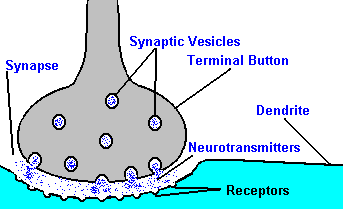
Dopamine and Schizophrenia
Many researchers believe that an overabundance of the neurotransmitter
dopamine binding to the D4 receptor site, causes the symptoms associated with schizophrenia. Anti
psychotic drugs work by blocking these dopamine receptor sites.
[1] [2] Previous Page
|

 Facebook
 Twitter
 VK
VK